Conversations about ADHD are reaching more people than ever. Awareness matters.
But for the children, young people, adults and families living with ADHD every day, awareness alone isn’t enough. What makes the real difference is understanding – and practical support that fits into everyday life.
For many people, a diagnosis brings relief. It finally explains why some things have always felt harder, from getting started on tasks to managing big emotions. But knowing why something happens is only the first step. Finding ways to navigate it at home, at school, at work and in relationships matters just as much.
That’s why Neuropathways has built a growing library of free resources to help people understand their ADHD, build on their strengths and find strategies that genuinely work for them.
Helping children and young people understand their ADHD
Children often make sense of themselves best through creativity, play and imagination. That’s the thinking behind My Race Car Brain, one of our newest worksheets.
It invites young people to picture their brain as a racing car engine – fast, full of ideas and quick to get excited. They design their own race car, discover what their engine is best at and practise using their brakes when they need to slow down.
The message is simple: there’s nothing wrong with the engine. A race car brain doesn’t need fixing. It needs understanding, the right track and some well-practised brakes. Framing ADHD in this way helps young people talk about impulsivity without shame, while recognising the strengths that come with it.
My Brain Browser takes a similar approach, comparing the brain to a browser with lots of tabs open – loading new ideas quickly and noticing things others miss. It helps young people celebrate what they’re great at, while learning to train their notifications to wait their turn.
Both are designed to be completed with a parent, teacher or support worker, opening up conversations that can feel hard to start.

Supporting emotional wellbeing and self-esteem
ADHD isn’t only about attention. For many people, the emotional side is the hardest part. Feelings can arrive quickly and take longer to settle.
Rejection sensitivity – an intense emotional response to perceived criticism or rejection – can make everyday interactions feel exhausting. And years of hearing “try harder” or “just pay attention” can quietly chip away at confidence.
Our Shaking the Bottle activity uses a fizzy drink bottle to show how pressure builds over the day, and what happens when it has nowhere left to go. For children who find it hard to put feelings into words, Fight, Flight, Fawn & Freeze helps them understand their different stress responses.
Confidence grows when strengths are noticed. Power Bytez helps parents and teachers build on a child’s unique abilities and qualities, while our Why Language Matters guide explores how the words we use shape how people feel about themselves – and how small changes can make a big difference to self-esteem.
Practical strategies for everyday challenges
Executive functioning – the skills that help us plan, organise, start tasks and manage time – can be a daily challenge for people with ADHD. Small, practical changes often make the biggest difference.
- Starting tasks: Traffic Light Tasks breaks routines into manageable steps for the morning, after school or any time of day.
- Pausing before acting: The Pause Playlist helps young people create their own plan for the moment between feeling and doing. Read more in our Pause Playlist blog.
- Navigating the school day: The Before the Bell Guide and After the Bell Guide support the transitions at either end of the day, including coping with the morning struggle and understanding after-school meltdowns that come from a day spent holding it all together.
- Learning and concentration: The Learning Passport helps young people share how they learn best with teachers, while My Study Planner supports focus and organisation.
- Life at home: Practical Tips for Everyday Life shares small changes that make daily routines smoother, and our Action Plan helps parents identify barriers and plan ahead.
Why community matters
Nobody should have to navigate ADHD alone. Support comes from many places – parents and carers who advocate every day, teachers who adapt their classrooms, friends who understand, workplaces that make reasonable adjustments, clinicians who listen and community organisations who create spaces to belong.
And, just as importantly, from individuals themselves, who often know best what helps them thrive.
Bringing different perspectives together helps us create tools that feel engaging rather than clinical – tools young people actually want to use.
Find the support that’s right for you
Every person with ADHD is different, and so is the support that helps them thrive.
Whether you’re a parent looking for ways to help your child, a teacher supporting a pupil, or an adult making sense of a recent diagnosis, there’s something in our resource library for you. Registration is free.
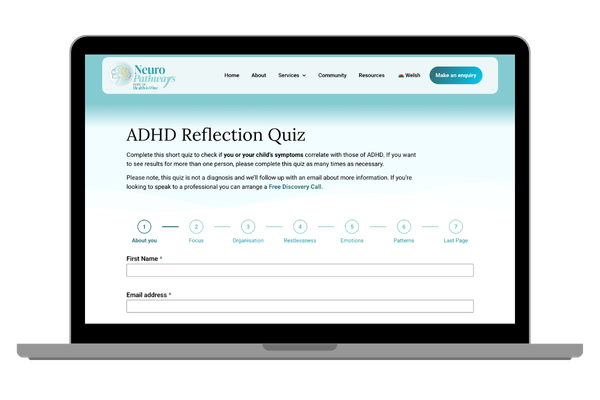
If you’re wondering whether ADHD might be part of your story, our free ADHD Reflection Quiz is a good place to start.
And if you’d like to talk things through, we’re here to help. Book a free Discovery Call with our team to discuss your needs and explore possible next steps – at a pace that feels right for you.