That split second between an impulse and an action can feel impossible to catch. It’s the moment our new Pause Playlist is designed to help with.
For many of us, it happens so quickly we barely notice it’s there. But for some neurodivergent children, young people and adults, whether diagnosed, undiagnosed or somewhere in between, that moment can be one of the hardest parts of daily life.
We’ve created the Pause Playlist to help make that moment a little easier to catch.
You might recognise it at home. The jump into a conversation before it’s finished. The answer that arrives before the question does. And sometimes it affects safety, like running ahead or stepping into a road without stopping to look.
As parents and carers, these are the moments that stay with us, because they can feel impossible to plan for.
The important thing to know is that impulsivity isn’t about a child not listening or not caring. It’s closely tied to self-regulation and the way the brain handles fast thoughts and big feelings.
When those feelings arrive quickly and loudly, the thinking part of the brain doesn’t always get the chance to catch up. That isn’t a flaw. It’s a skill that can be supported, practised and grown.
Why we made the Pause Playlist
Emma Ruthven, one of our Assistant Psychologists, sees this pattern often: “Some neurodivergent clients we support, either undiagnosed or suspected, can struggle with impulse control. We’ve created the Pause Playlist resource to help create a plan for these moments and put some strategies in place.”
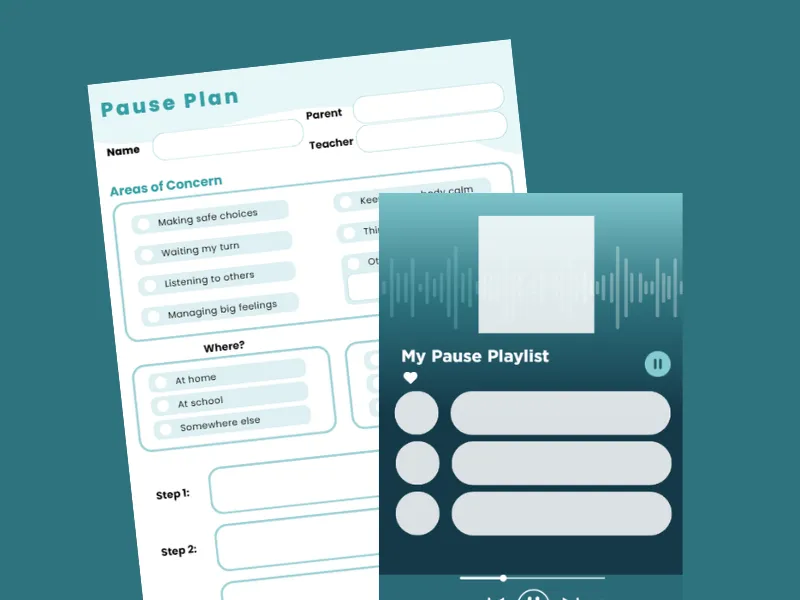
The Pause Playlist is a simple, practical resource designed to help children and young people plan ahead for those tricky moments before they happen.
It can be completed together with a parent, carer or teacher, helping everyone identify the situations where pausing feels difficult and agree on strategies that might help.
That way the plan feels shared rather than imposed, and the young person is far more likely to reach for something they helped build.
It isn’t about “stop and think”
It is not about expecting someone to simply stop and think in the heat of the moment. That rarely works when everything has already sped up.
The value comes from the planning you do beforehand, in a calm moment, so there’s something familiar to fall back on when a fast thought or big feeling takes over. A little preparation can make that pause easier to reach.
Because the resource is built to be completed with a trusted adult, it works just as well at the kitchen table as it does in a classroom. Teachers and support staff often notice these moments too, and when everyone around a young person is responding in the same, consistent way, that’s often where the real progress happens.
It’s also worth saying clearly that the Pause Playlist is a supportive tool, not an assessment or a diagnosis. It’s a first, practical step you can take today, whether or not a formal assessment is part of your journey.
Understanding the patterns behind impulsive moments tends to lift pressure off the whole family, and that matters in its own right.
Getting started
You can download the free Pause Playlist from our resources library. You’ll be asked to sign up or log in first, which also keeps you connected to new resources as we add them. Sit down together when things are calm, work through it at your own pace, and treat it as a living plan you can revisit as your child grows.
And if you’d like to talk through what you’re noticing, we’re here before, during and after assessment. Sometimes the most valuable step is simply an early conversation.
Download the free Pause Playlist.
Book a free discovery call to begin your pathway.